Fixed lubrication intervals are just a guess with a date attached.
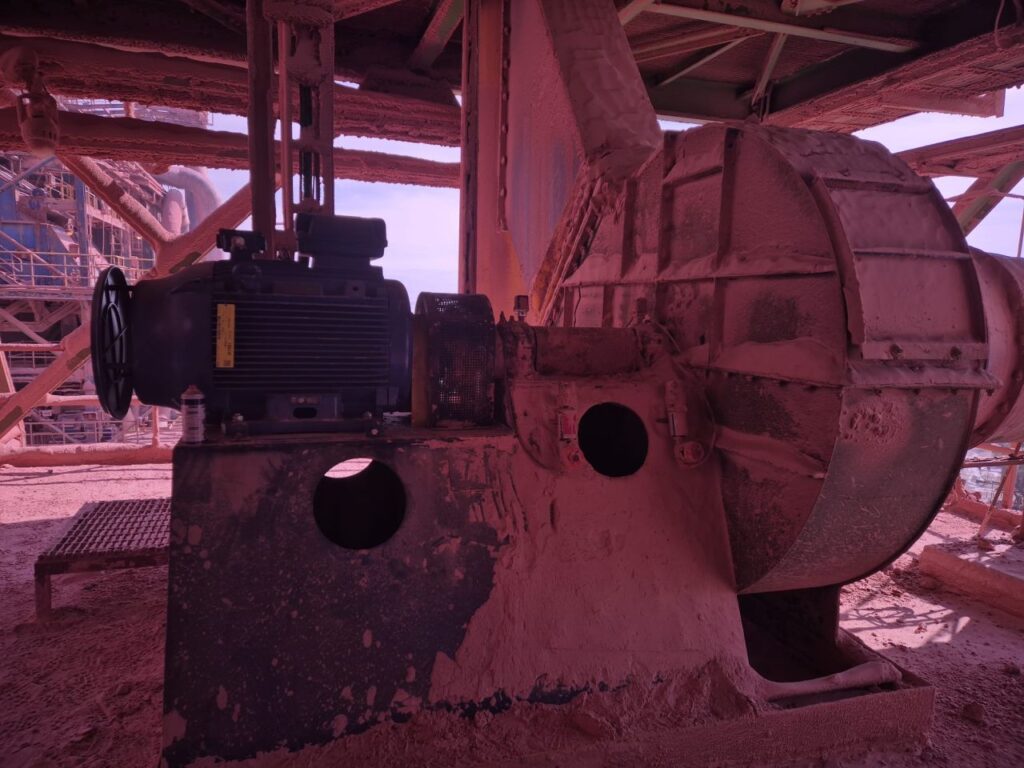
This fan is installed at a customer site of HCP Sense in the raw materials industry. Dust everywhere, continuous operation, harsh conditions. One look at this photo gives you an idea of what the bearings have to endure.
Until now, lubrication was carried out according to a schedule. Every X weeks, a defined amount of grease. Regardless of the bearing’s actual condition.
The problem:
Relubrication too early or too much: The grease gets overworked, bearing temperatures rise, grease is wasted, and wear becomes a concern.
Relubrication too late: The lubricating film is no longer sufficient, and wear begins.
The schedule knows nothing about dust ingress, changing loads, or temperature fluctuations.
⠀
A fixed interval is always a compromise. It has to account for the worst-case scenario, which means it is wrong most of the time.
That’s why we turned the approach around.
Our system measures the lubrication condition directly inside the bearing and controls the relubrication unit automatically. Grease is supplied when the bearing needs it. Not when the calendar says so.
The benefits for the customer:
Lubrication intervals adapt to the actual condition of the bearing.
No over-lubrication or under-lubrication.
Lower grease consumption and fewer manual interventions in an environment where every intervention takes time and effort.
Bearing damage caused by insufficient lubrication is prevented before it occurs.
⠀
A question for everyone responsible for lubrication schedules:
How do you know your lubrication interval is right? 👇