Bearing Test Rig Services: Making Tribological Processes Visible
Tribological processes are particularly difficult to predict under mixed lubrication conditions. Experimental investigations reveal how lubricant films and tribofilms behave under realistic operating conditions. With impedance-based testing services, HCP Sense makes these processes visible during bearing operation. The resulting data support lubricant developers in optimizing products and design engineers in developing and validating models and designing reliable systems.
The Bearing Becomes a Sensor
High-frequency electrical impedance measurements distinguish between boundary, mixed and full-film lubrication. Under suitable conditions, changes in lubricant film thickness, transitions to mixed lubrication and indications of surface damage can be detected. Under mixed and boundary lubrication, the intensity of metallic contacts, running-in processes, and tribofilm formation and breakdown can be investigated.
Insights for Development and Application
Lubricant developers can compare formulations, investigate lubrication mechanisms and assess tribofilm stability. Aging, contamination and lubricant mixing are also important testing topics. Mixing with production lubricants, corrosion protection fluids or residual oil remaining after oil changes is often unavoidable. Its effects on lubricating and tribofilm formation as well as wear protection can be investigated.
For design engineers, measurements under mixed lubrication conditions provide valuable data for model development and validation. Systematically varying load, speed, temperature and oil flow enables the determination of Stribeck curves, identification of transitions between lubrication regimes and definition of safe operating ranges. These insights support the targeted design and optimization of lubrication systems.
Two Flexibly Programmable Test Rigs
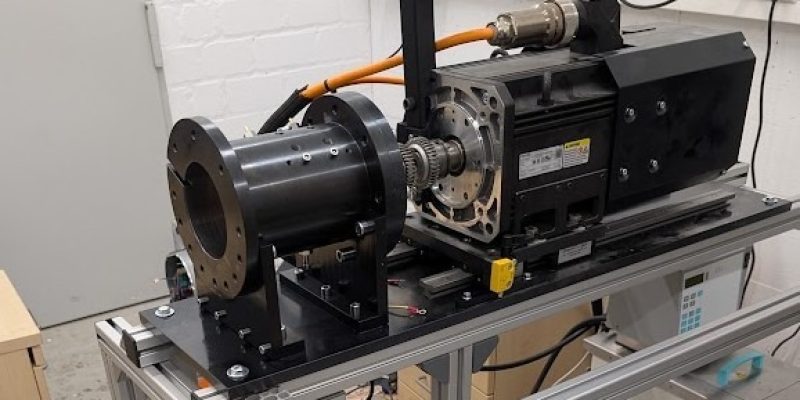
LP01 tests oil- and grease-lubricated rolling bearings under axial loads up to 10 kN and speeds up to 9,000 rpm. Circulating oil lubrication with flow control and temperature conditioning from −20 to 120 °C is available.
LP02 tests grease-lubricated bearings under radial loads up to 2 kN and speeds up to 2,500 rpm. Both rigs offer freely programmable test sequences; LP02 also supports programmable load profiles.
Equipping Your Test Rigs
Impedance measurement is not limited to our own test rigs. We equip your bearing test rigs and tribometers with our sensor technology. Retrofitting existing test rigs is also possible. Established tests such as FE8 or FE9 typically record only a few parameters, such as torque and wear. High-frequency impedance measurements provide additional insight into lubricant film and surface condition: from Stribeck curves under realistic operating conditions and the development of pitting to the formation of reaction layers and oil aging. Whether as a testing service with us or by equipping your own test rig, get in touch and we will find the right solution.