The bearing failed at 1:45 a.m. The test was not stopped until 6:10 a.m.
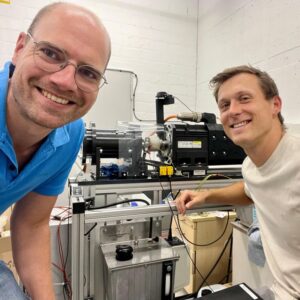
A customer of HCP Sense uses our sensor technology for quality assurance. The objective is to deliberately run bearings until failure and verify whether they meet the required specifications.
To achieve this, a defined load profile is applied approximately every two hours. Again and again, until the bearing fails.
What our measurement data reveals:
Between 1:30 and 2:00 a.m., the lubrication indicator begins to decline, marking the onset of damage.
The damage progresses, and the indicator continues to fall.
In between, the indicator briefly rises due to individual events inside the bearing. Nevertheless, the bearing is already damaged beyond recovery.
Eventually, the indicator reaches zero.
The test rig continued running for more than four hours with a bearing that had already failed.
And this is where many testing procedures get it wrong:
If you only know when a test ended, you do not know when the damage actually occurred. Bearing service life is overestimated, and the destroyed bearing on the workbench reveals very little about how the damage began.
Knowing the exact moment when damage starts tells you:
Which load cycle triggered the damage.
How long the bearing actually lasted.
When to stop the test to investigate the initial damage rather than a pile of debris.
And there is another benefit: less testing time.
Every hour a test rig runs with an already failed bearing is wasted capacity. Across many test runs, those hours add up. Stop earlier, and you can start the next test sooner.