How much oil does a bearing really need? 🛢️
The honest answer: in most cases, nobody knows exactly.
Oil circulation lubrication systems are often designed with generous oil flow rates. Better too much than too little. This is understandable, but it comes at a cost:
More oil means higher churning and friction losses.
Higher losses generate more heat inside the bearing.
Ultimately, this leads to greater energy consumption, larger equipment, and higher costs.
The real question is not how much oil provides a sufficient safety margin, but at what point the lubricant film can no longer support the load.
We can now measure exactly that.
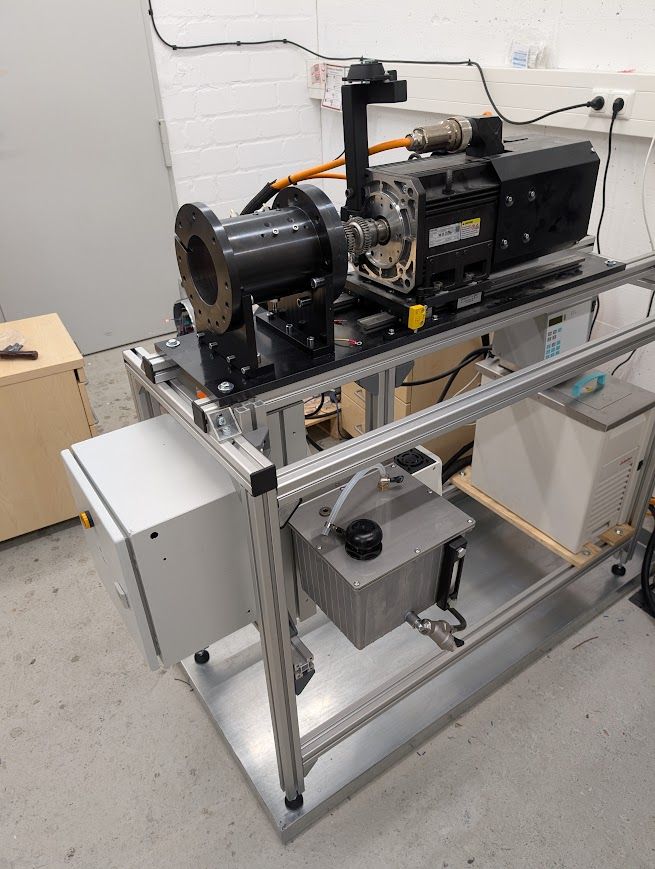
At HCP Sense, we have upgraded our test rig with a temperature-controlled oil circulation lubrication system. This allows us to supply bearings with precisely controlled, minimal amounts of oil and observe in real time how the lubrication condition changes.
What our test rig can now do:
Continuously monitor the lubrication condition inside the bearing with clear, measurable results.
Precisely control the oil supply down to minimum quantities.
Adjust the oil temperature to deliberately vary lubricant viscosity.
Freely set axial forces and rotational speeds.
Operate fully automatically, 24/7.
This enables us to answer questions that would otherwise be addressed using experience-based estimates and safety factors.
Measurement data instead of guesswork.