Intelligent Plain Bearing Monitoring for Large Engines
Early Damage Detection with Innovative Sensor Technology from HCP Sense
Plain bearings are among the most critical components in combustion engines. Although bearing failures occur relatively rarely, a sudden bearing seizure can, in the worst case, damage the crankshaft and result in extended downtime.
Particularly in medium- and high-speed engines, every second counts when it comes to preventing catastrophic damage. The time required to bring an engine to a complete stop can be up to 60 seconds.
A Self-Accelerating Failure Process Requires Rapid Response
Most plain bearing failures originate in the lubricant. Either the lubricant supply becomes insufficient, or the concentration of contamination, wear particles, or oxidation products increases excessively. As a result, friction rises and triggers a self-accelerating failure mechanism.
As friction increases, the temperature within the lubricant film rises, causing the film to become progressively thinner until it eventually breaks down. At this point, the bearing is no longer operating in the safe hydrodynamic lubrication regime but enters the dangerous mixed-friction regime, where friction levels are 10 to 20 times higher.
From this stage onward, it may take only seconds before the bearing suffers severe seizure damage, potentially causing significant damage to the crankshaft as well.
Only those who can detect critical changes at an early stage can take action in time. HCP Sense’s intelligent sensor solutions make this possible through precise, real-time monitoring of the lubrication condition.
Why Conventional Monitoring Systems Are Not Enough:
In many engines today, bearing monitoring is still limited to simple temperature measurements. However, temperature is a lagging indicator—by the time it rises significantly, the damage is often already underway or has occurred.
HCP Sense provides deeper insights. Through advanced sensor technology, early warning signs within the lubricant film can be detected long before conventional systems react. This enables operators to identify critical conditions early and prevent costly failures.
Technology That Makes the Difference:
On the Test Bench: Understanding the Lubricant Film to Prevent Failures
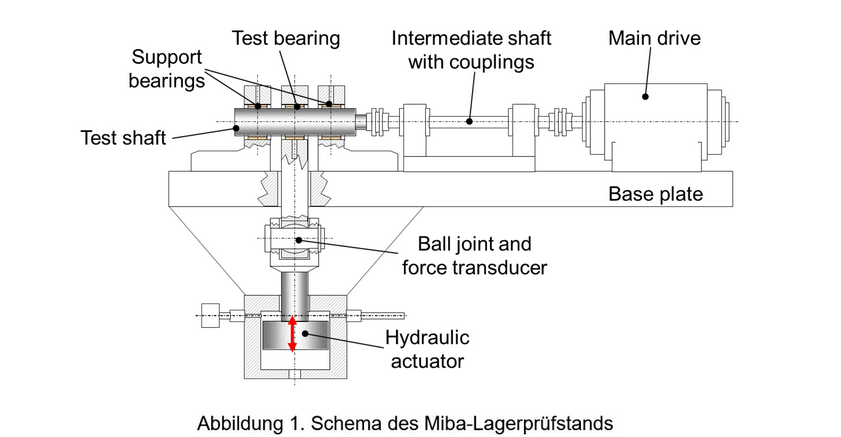
The sensor technology developed by HCP Sense was evaluated on the MIBA plain bearing test rig (Figure 1) to demonstrate its capabilities.
After the running-in phase, the test bearing is subjected to increasing load levels. At a constant rotational speed, the load is increased by 10 kN every two minutes until bearing seizure occurs.
In the static test, the load remains constant at each load level. In the dynamic test, the load is superimposed with a 50 Hz pulsation.
To quantify the lubrication condition, HCP Sense developed the characteristic parameter k_mix.
* A k_mix value of 100 represents a fully separating lubricant film, corresponding to pure hydrodynamic lubrication.
* A k_mix value of 0 indicates complete mixed-friction operation.
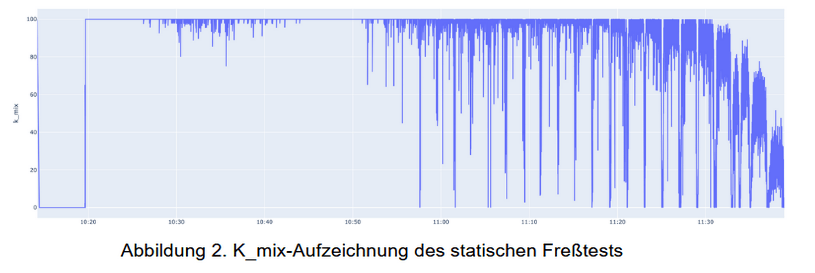
Figure 2 shows the final 40 minutes before seizure during the static test. The k_mix parameter detected increasing mixed-friction conditions approximately 30 minutes before failure occurred. Bearing seizure took place when k_mix reached a value of 50.
A comparison of two sections from the dynamic seizure test demonstrates how k_mix responds to different load conditions.
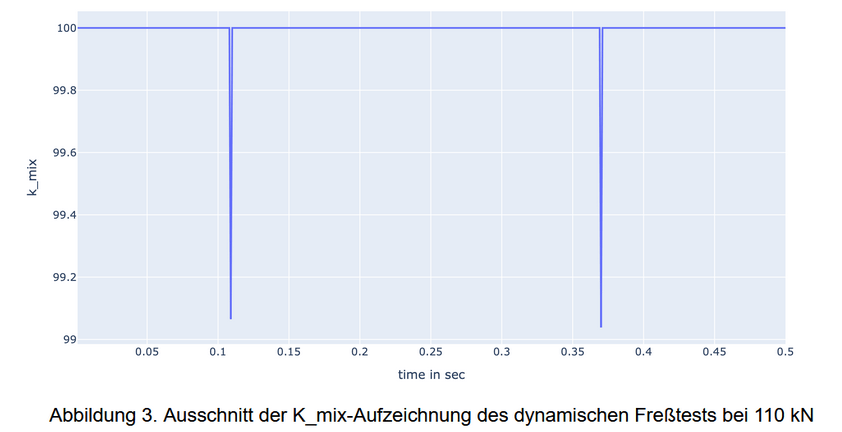
At 110 kN, a fully separating lubricant film is maintained throughout all load phases.
At 290 kN, the dynamic load profile is clearly reflected in the changing lubrication states. During peak load conditions, the bearing operates extensively in mixed friction. Bearing seizure occurred only a few minutes later.
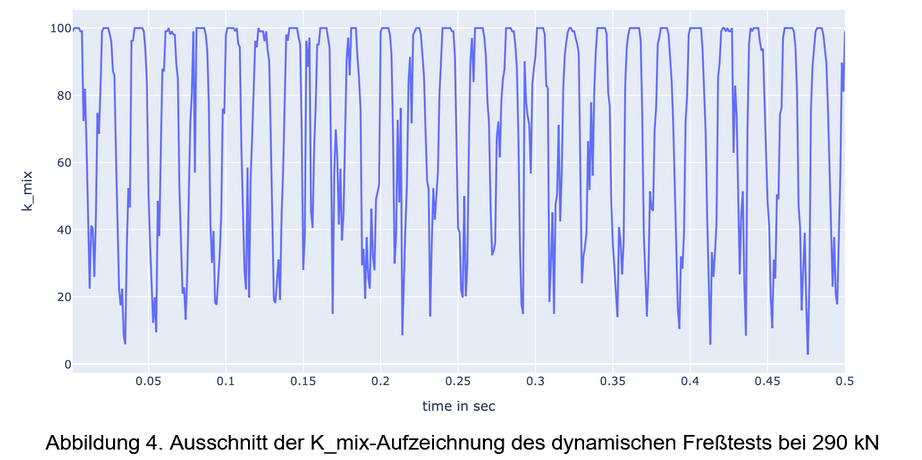
Figure 5 illustrates the development of k_mix at peak load over the various load stages. The transition from hydrodynamic lubrication to mixed-friction operation is clearly visible.
Proven Performance
The HCP Sense sensor technology detected increasing mixed-friction conditions well before bearing seizure occurred. This early warning capability provides valuable time for operators to take corrective action and prevent severe damage.
Applications – When Does Condition Monitoring Pay Off?
Condition monitoring is particularly valuable in applications where bearing failures are costly or difficult to predict:
| Application | Benefits of HCP Sense Condition Monitoring |
|---|---|
| Prototypes & Development | Early fault detection, reliable validation and approval |
| High-Performance Engines (>20 bar BMEP) | Prevention of costly damage under high-load conditions |
| Long-Life Production Engines | Optimized maintenance, reduced failure rates |
⇒ For standard production engines with extremely high reliability (e.g., below 20 bar BMEP), comprehensive condition monitoring may not always be economically justified. However, for critical applications, continuous monitoring is indispensable.
Conclusion: Greater Reliability, Less Downtime – with HCP Sense
– HCP Sense solutions provide:
- Deep insight into the condition of plain bearings
- Early warning of potential bearing damage.
- Reduced downtime and lower repair costs.
- A scalable monitoring system—from test benches to series production